We use cookies to ensure you get the best experience on our website. For more information on how we use cookies, please see our cookie policy.
By clicking "Accept", you agree to our use of cookies.
Learn more.
Technical documents and specifications for this product.
AQUA 70-516_datasheet
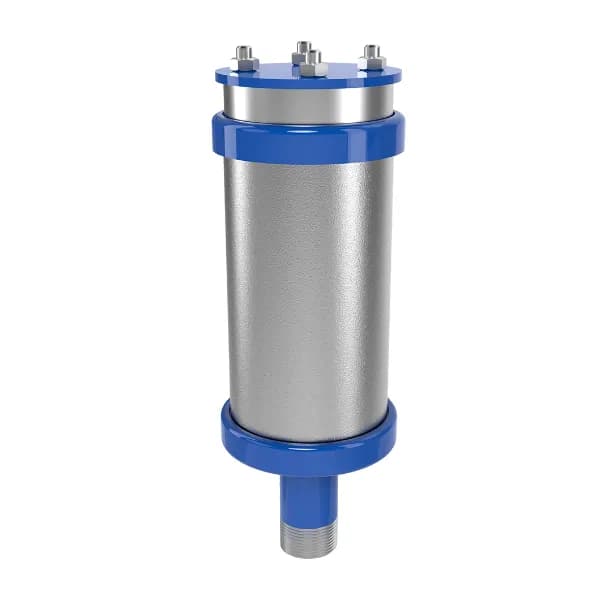
The CLA-VAL AQUA 70-516 is an anti-slam air release and vacuum break air valve, described as simple, reliable, and accurate. This valve is designed to manage various pipeline conditions, including high-volume air discharge, pressurised air release, and vacuum breaking.
Reliable Performance: The valve provides a simple, reliable, and accurate way to manage air in pipelines.
Multi-Function Operation: It handles multiple functions, including releasing large volumes of air and breaking vacuums.
Surge Protection: In anti-slam mode, it restricts the rate of air escape to slow the flow of water and protect the pipeline from surge events.
Positive and Negative Pressure Control: It releases air when the pipeline is pressurised and draws air in to prevent a vacuum.
The CLA-VAL AQUA 70-516 valve is used in pipeline applications to manage various conditions, including:

Filling the pipeline to discharge large volumes of air.
Controlling air discharge during surge events, pump trips, or rapid valve closure.
Releasing small amounts of accumulated air during normal operation.
Drawing in air to break a vacuum when the pipeline is draining or a pump stops.
The valve's internal structure includes an anti-slam float, a small orifice (nozzle) float, and a control float.
It also contains a baffle plate to assist in vacuum breaking.
Key materials include HDPE for the floats, EPDM for the nozzle seat, and SS304/316 for various other components like the nuts, screen mesh, and barrel.
Valves with a DN 25 or DN 50 size have a screwed end connection (BSP/NPT).
Larger valves from DN 80 to DN 300 have a flanged, studded end connection.
Optional outlet connections are available, including a screwed outlet, screwed T outlet, gooseneck outlet, and swivel outlets.
Typical Operating Pressure: The valves have various pressure ratings from 0.2 to 100 bar, depending on the model.
Operating Temperatures: The operating temperature range is 0 to 80°C.
Valve Sizing: To convert a flow rate in litres per second (L/s) into velocity in metres per second (m/s), you can use the formula: V= A Q where V is velocity, Q is flow, and A is the area.
High Volume Air Discharge: During filling, air passes through the valve at the same flow rate as the water. The floats remain open until water enters the valve, at which point they are buoyed up and close the valve.
Anti-Slam Air Discharge: During rapid filling or pump trips, the valve switches to a smaller anti-slam orifice. This restricts the rate at which air can escape, slowing the flow rate of water through the pipeline.
Pressurised Air Release: During normal operation, if air accumulates, the control float will drop, releasing the air through the small orifice. The float then buoys back up to seal the orifice once the air is released.
Vacuum Break: If the pipeline is draining or a pump stops, the floats will drop towards the baffle plate. Air will then enter the pipeline through the large orifice to prevent a vacuum from forming.